From Sand to Hardcourt: Making the Beach-to-Indoor Volleyball Switch
Quick Answer: Moving from beach to indoor volleyball in late summer changes three things at once: the surface (you jump higher off hardcourt but every landing costs more), the speed (a lighter-feeling ball, faster sets, and six players compress your reaction time), and your role (from doing everything to doing one thing well). The injuries cluster in the first two to three weeks, almost entirely from jump-volume spikes on stiff surfaces after months of soft sand landings. Ramp jumping gradually, rebuild landing mechanics, and let your timing recalibrate before you judge yourself.
Sand made you strong. The gym is about to make you fast — if your tendons get a polite on-ramp.
What actually changes when you move from sand to hardcourt?
Almost everything except the net, and mostly in your favor — eventually.
You will jump noticeably higher indoors. Sand steals energy from every takeoff; hardcourt gives it all back. Players coming off a beach summer routinely touch higher than they did in spring, which is the famous payoff of sand training. The catch is that everything you gained in takeoff you now owe in landing.
The ball and the tempo speed up. Indoor balls are heavier and fly faster than beach balls, sets run quicker, and attacks come from six rotating players instead of one opponent across the net. Your first indoor scrimmages will feel like the game got fast-forwarded — that is recalibration, not decline.
The elements disappear. No wind reading, no sun serves, no shifting footing. Serve receive gets more honest, and the skills you built adjusting to chaos make the controlled version feel almost easy within a couple of weeks.
Your job narrows. On the beach you did everything every rally. Indoors you have a position, rotations, and specific responsibilities — the mental load shifts from doing it all to doing your piece at exactly the right time within a six-person system.
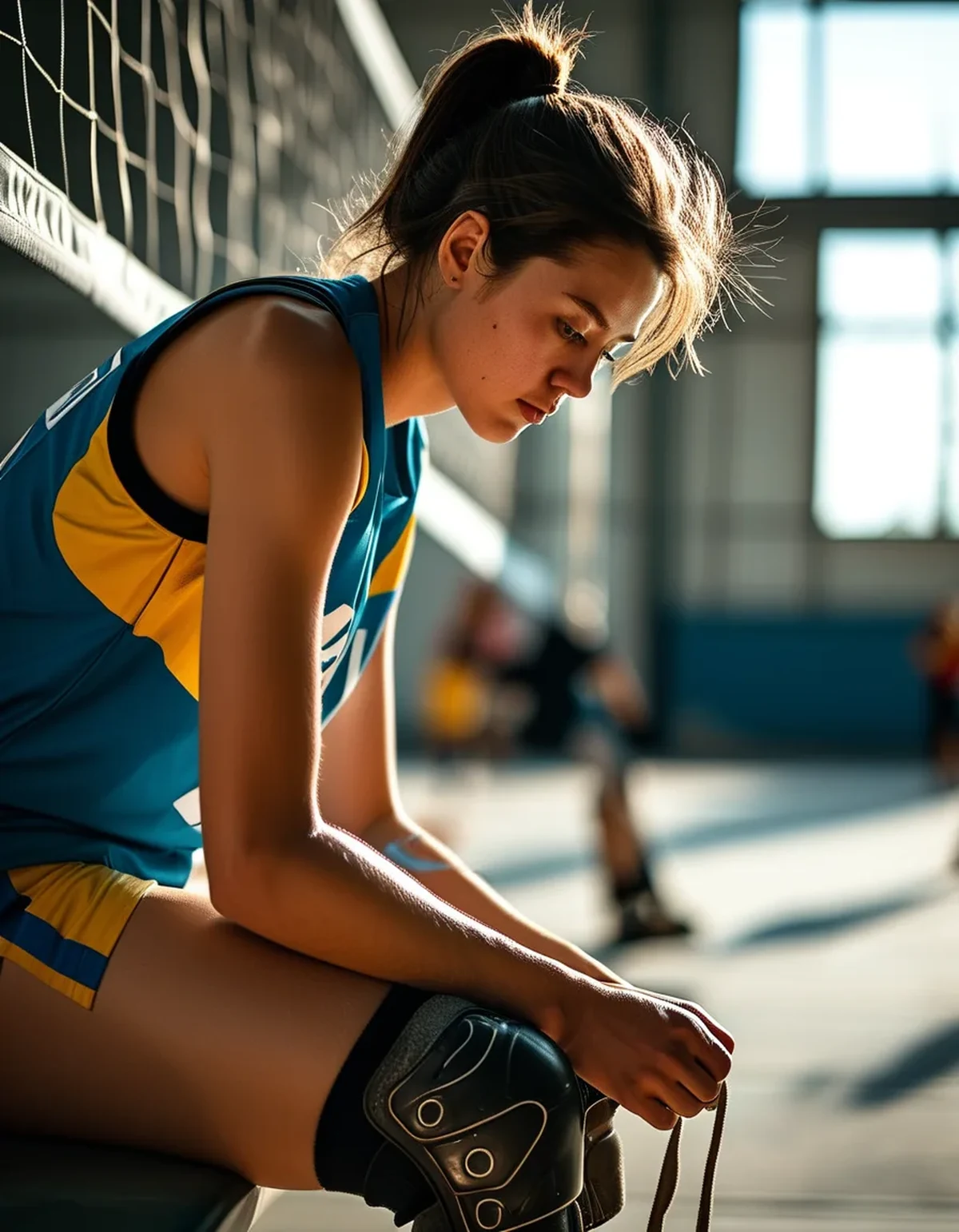
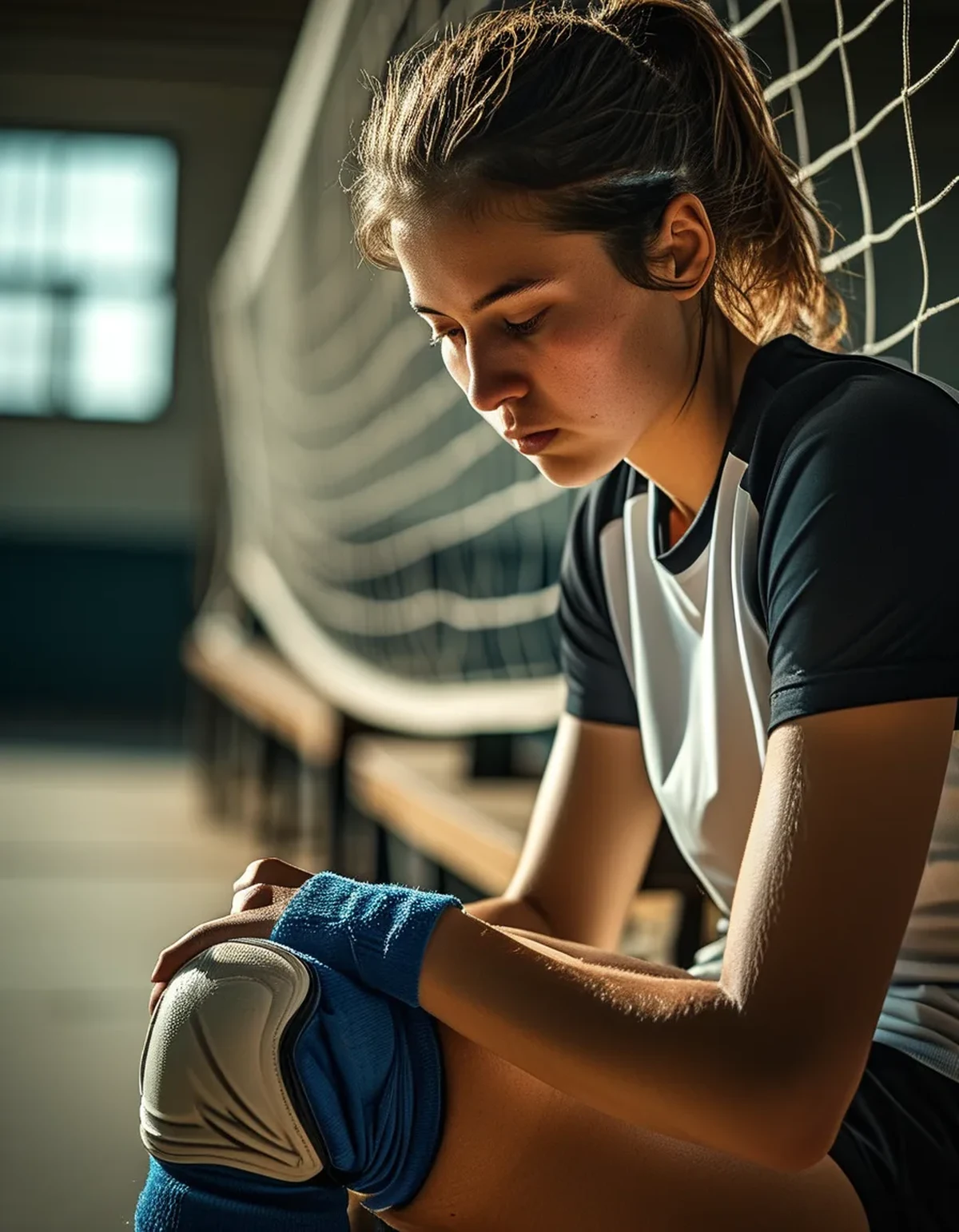
And the wardrobe changes with the venue: court shoes with real lateral grip, kneepads you actually wear, and practice gear that survives floor contact — most players land on spandex shorts or fitted leggings plus kneepads for exactly this reason.
Why do knees and ankles complain in the first two weeks?
Because you spiked the landing load overnight after a summer of soft ones.
Sand is a landing cushion; hardcourt is not. Every jump all summer ended in a forgiving surface that absorbed much of the impact. The gym returns that force to your joints and tendons — and indoor practice multiplies jump count at the same time, with blocking added back and faster rally cycles.
Tendons adapt slower than fitness. Your engine is ready for gym season after a beach summer; your patellar tendons, Achilles, and calves are conditioned for sand. The classic result is patellar tendon soreness — jumper’s knee — appearing in week two or three, along with cranky Achilles and shin complaints. It is a load-spike pattern, and it is preventable.
The on-ramp that works:
Ramp jump volume over two to three weeks. If practices are daily, keep extra jumping outside practice near zero at first. Resist the urge to max-test your shiny new vertical every day of week one.
Rebuild landing mechanics deliberately. Land toe-to-heel with bent knees and hips back, knees tracking over toes, absorbing quietly. Quiet landings are the whole cue — a loud flat landing is force going into joints instead of muscle.
Feed the shock absorbers. Calf raises, Spanish squats or wall sits, and single-leg balance work, a few short sessions a week, give the tendons the capacity the gym now demands.
Wear court shoes, not running shoes. Lateral support and grip are the point; running shoes are built for one direction and roll ankles in the other three.
Respect soreness location. Muscle soreness is normal in week one. Pain at the tendon just below the kneecap, or in the Achilles, that warms up during play and aches after is an early-warning pattern — cut jump volume for a few days rather than pushing to week four where it becomes a season problem.
This is general guidance, not medical advice. Pain that persists, swells, or sharpens deserves a professional look.
How do you adapt your skills to indoor speed fast?
Steal the recalibration reps early, and let the sand skills shine where they overlap.
Timing comes back through volume of touches, not thinking. The faster indoor tempo mostly needs exposure: extra pepper, serve receive reps, and hitting lines the first two weeks shrink the fast-forward feeling faster than any analysis. Expect mistimed approaches for ten days — everyone making the switch has them.
Recalibrate your approach footwork to a grippy floor. Sand approaches are shorter and more vertical because the surface slides; hardcourt rewards a longer, faster final two steps. Rebuild your full approach at increasing speeds before you judge your hitting.
Blocking is a new-old skill. Beach blocking is optional and singular; indoor blocking is systematic, timed, and constant for front-row players. Spend deliberate reps on block footwork and hand position — it is the skill most atrophied by a beach summer.
Your sand-built ball control is a superpower — use it. Beach players return indoors with better reading, better first contacts, and calmer out-of-system play than players who took summer off. Volunteer for serve receive; you are better at it than you were in spring.
Learn your rotation cold before the first scrimmage. Overlap rules and base positions are the cheap mistakes of early season; ten minutes with a whiteboard saves three violations.
And manage the gym environment itself: indoor air is warmer and stiller than a beach breeze, floors punish diving without pads, and hydration habits from the sand still apply even without the sun.
What Nobody Tells You About Indoor Season
Your vertical really did improve — measure it. Test your touch in week one and enjoy it. Sand training is the classic off-season vertical builder, and the difference is often two to four inches. It is the reward for a summer of heavy takeoffs.
Floor burns are a rite of re-entry. After a summer of diving into sand, your first hardcourt dig reminds you why kneepads exist. Wear them from day one, not after the first burn.
The gym exposes conditioning honestly. No wind delays, no between-point strolling in sand — indoor rallies cycle relentlessly, and the repeat-jump demand is higher than beach even though beach felt harder to move in. Week one leaves fit players surprisingly gassed.
The sounds and sightlines are recalibration too. Judging serves without wind, tracking the ball against a ceiling instead of sky, and hearing six voices instead of one — small adjustments your brain makes silently in the first sessions while you blame your hands.
Specialists sharpen fast, generalists last. The beach summer made you a generalist; keep those touches even as your indoor role narrows. The best indoor players in spring are usually the ones who never fully stopped playing all-skills volleyball.
The first two weeks predict the season. Players who ramp politely are peaking at midseason; players who max out in week one are icing a knee by October. Boring math, every year.
FAQ: Beach-to-Indoor Questions, Answered
How long does the timing adjustment take?
Most players feel normal within one to two weeks of regular touches. The lighter-feeling faster ball and quicker sets recalibrate through volume, so early extra reps — pepper, serving, hitting lines — shorten the awkward window considerably.
Why do my knees hurt indoors when they never hurt on sand?
Sand absorbed your landings all summer; hardcourt returns that force, and practice jump counts rise at the same time. It is a classic load spike. Ramp jumping over two to three weeks, land quietly with bent knees, and add calf and tendon work.
Do I really need different shoes for indoor?
Yes. Court shoes provide the lateral grip and support the game’s cutting and landing demand, and gym floors demand non-marking soles. Running shoes are the most common early-season ankle-roll story there is.
Will I lose my beach skills during indoor season?
Mostly no — indoor volume maintains ball control, and your reading keeps improving. The beach-specific skills that fade are wind judgment and sand movement, and both return within a session or two next summer.
TL;DR:
- Hardcourt gives back the jump height sand stole, but every landing now costs more — and tendons adapt slower than fitness.
- Ramp jump volume over two to three weeks, land quietly with bent knees, and add calf and tendon capacity work.
- The faster ball and tempo recalibrate through touch volume; expect ten awkward days and steal extra reps early.
- Court shoes and kneepads from day one, rotations learned before the first scrimmage, and your sand-built ball control on display in serve receive.
Test your vertical in week one and write it down. Sand paid you all summer — collect it, then protect it.
Keep Reading
This article is for general informational and styling purposes only. Fit, sizing, and product availability may vary.