Why Jump Timing Matters More Than Jump Height for Hitting Power
Hitters chasing more power in volleyball tend to focus almost entirely on increasing their vertical jump, treating a higher reach as the key to a harder spike. But timing the approach so the peak of the jump lines up with the ball’s arrival is what actually transfers power into the hit, and a well-timed average jump consistently outperforms a poorly timed high one.

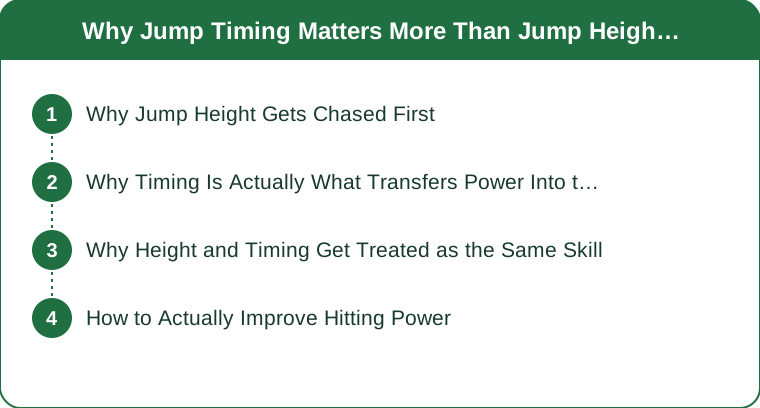
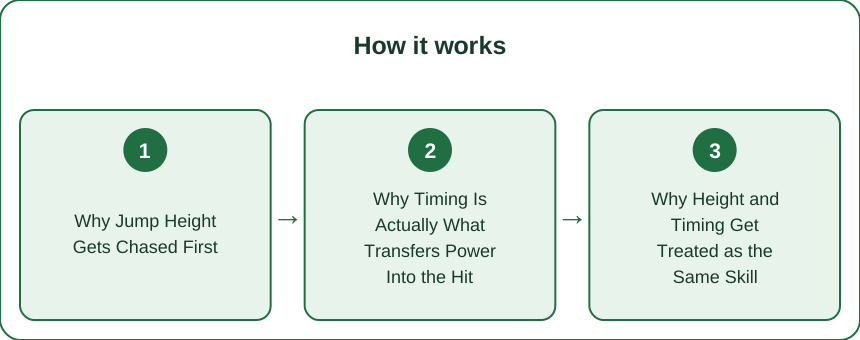
Why Jump Height Gets Chased First
The measurable-goal appeal: vertical jump being an easy number to test, track, and train directly in the weight room, which makes it feel like the most direct and provable path to hitting the ball harder.
Why Timing Is Actually What Transfers Power Into the Hit
The mechanical reality: contact needing to happen at the very peak of the jump, when the body’s upward momentum has fully converted into a stable platform for the arm swing, and a jump that peaks too early or too late means the hitter is either falling or still rising at contact, losing power and control regardless of how high that jump reached.

Why Height and Timing Get Treated as the Same Skill
The overlap: a genuinely high jump often does correlate with harder hits among elite players, since they’ve usually trained both together, which makes it easy to assume jump height alone explains the power, when timing is doing much of the actual work.
How to Actually Improve Hitting Power
The practical focus: drilling the approach footwork against a live setter until the jump consistently peaks right as the ball arrives, rather than isolating vertical jump training alone, and the frame (contact at the exact peak of the jump transfers power into the hit — approach timing against a real set is what actually builds a harder spike.)
Hitters chasing more power tend to focus almost entirely on increasing vertical jump, but contact needs to happen at the very peak of the jump when upward momentum has fully converted into a stable platform for the arm swing, and a jump that peaks too early or late loses power no matter how high it reached. A high jump often does correlate with harder hits among elite players who’ve trained both together, which makes it easy to overcredit jump height alone. Drilling approach footwork against a live setter until the jump consistently peaks right as the ball arrives is what actually builds a harder spike.
Keep Reading
This article is for general informational and styling purposes only. Fit, sizing, and product availability may vary.