Why Good Blockers Watch the Setter, Not the Ball
New blockers stare at the ball, jump when the hitter jumps, and wonder why they keep arriving late. The players who shut down attacks are doing something completely different: they are reading the play before the ball ever gets to the hitter. Blocking is a reading skill first and an athletic one second. Here is why watching the setter beats watching the ball, the hitter cues that tell you where the attack is going, and how to time a block so you are up when the ball arrives.

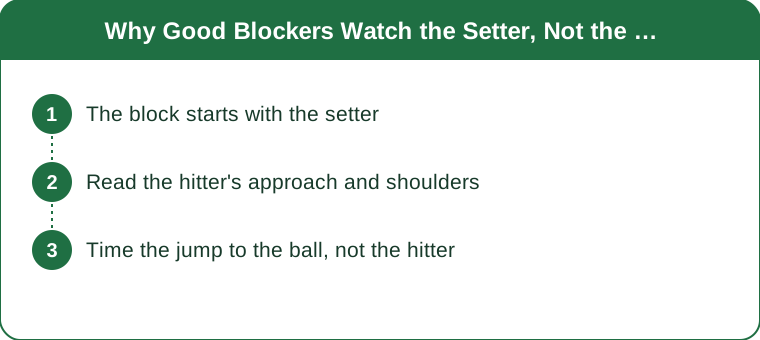
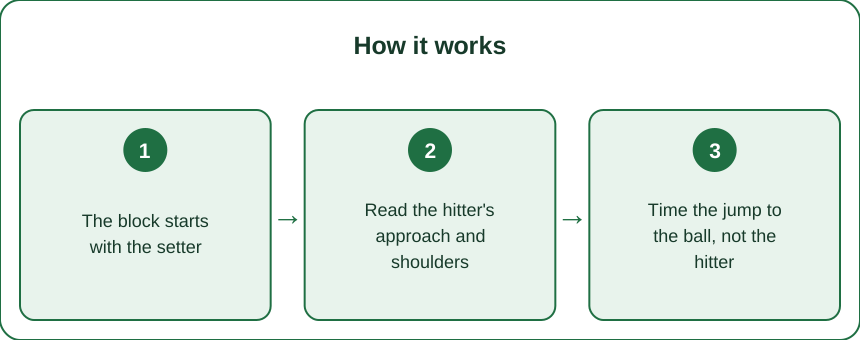
The block starts with the setter
By the time the ball leaves the hitter’s hand, it is almost too late to block well. Good blockers start reading at the setter, watching the set’s height, speed, and direction to know which hitter is getting the ball and roughly where. A fast set to the outside, a high ball to the pin, a quick to the middle: each tells you where to be before the attacker even loads. Watching the ball fly to the hitter wastes the split second that separates a good block from a hand you throw up too late.

Read the hitter’s approach and shoulders
Once you know who is hitting, the attacker’s body tells you where. Their approach angle, the direction their hips and shoulders face, and the way their arm cocks all leak information about whether they are going line or cross, tipping or swinging. Blockers who learn to read shoulders and arm swing get their hands to the right spot instead of guessing. This is why experienced blockers seem to know where the ball is going: they are not psychic, they are reading the same cues every time and trusting them.
Time the jump to the ball, not the hitter
The classic beginner mistake is jumping when the hitter jumps, which usually means going up too early and coming down as the ball arrives. Except on fast quick sets, you want to jump slightly after the hitter, timing your block so your hands are at their highest as the ball reaches them. Get your hands over the net and press forward rather than just reaching up. Reading tells you where; timing tells you when, and together they turn blocking from a hopeful jump into a genuine weapon.
Blocking looks like an athletic contest, but it is really a reading contest. Start your read at the setter to know who is hitting and where, use the hitter’s shoulders and arm swing to know line versus cross, and time your jump to the ball rather than mirroring the attacker. Do those three things and you stop arriving late with a wall of air and start actually stuffing attacks, even against hitters who out-jump you. The tallest blocker who reads nothing loses to the shorter one who reads everything, because in blocking, anticipation beats altitude nearly every time.
Keep Reading
This article is for general informational and styling purposes only. Fit, sizing, and product availability may vary.