How to Actually Choose Volleyball Knee Pads That Don't Slide Down Mid-Dig
Quick Answer: The right volleyball knee pads combine a snug, non-slip band above and below the knee with foam thick enough to cushion a hard floor dive without restricting mobility — sizing by calf and thigh measurement, not shoe size, is the single biggest fix for sliding pads.
You’ve adjusted the same pair mid-rally more times than you’ve actually used them to cushion a dig. That’s a sizing problem, not a toughness problem.

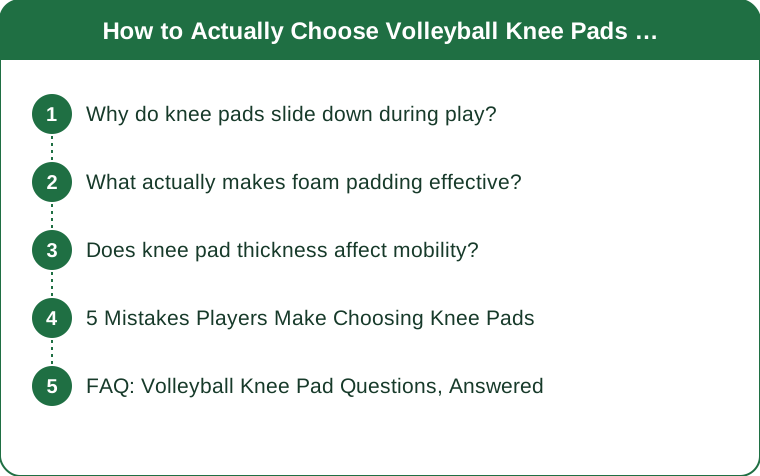
Why do knee pads slide down during play?
Sliding almost always comes from improper sizing, not a defective product — a pad that’s too loose around the thigh has nothing to grip against once you start moving explosively.
Most brands size by calf and thigh circumference, not by shoe or clothing size, and skipping that measurement step is the most common reason players end up readjusting pads mid-set.
What actually makes foam padding effective?
Density matters more than thickness alone. A thick but low-density foam compresses fully on impact and stops protecting after the first hard dig, while a moderately thick, higher-density foam maintains cushioning through a full match.
Dual-density foam — softer on the outer impact layer, firmer at the core — is common in higher-end pads specifically because it balances comfort with actual protection on repeated dives.

Does knee pad thickness affect mobility?
Yes — bulkier pads can restrict the deep knee bend digging and blocking require, which sometimes leads players to choose thinner pads purely for mobility and sacrifice protection.
The better fix is usually a contoured or hinged design built specifically for volleyball’s movement patterns, rather than choosing thinness over protection outright.
5 Mistakes Players Make Choosing Knee Pads
1. Sizing by shoe size or guessing, instead of measuring calf and thigh circumference against the brand’s chart.
2. Buying the thickest pad available, assuming more foam always means more protection, when fit and density matter more.
3. Ignoring the non-slip band material, which is what actually keeps a well-fitted pad from creeping during play.
4. Not replacing compressed foam, which loses real protective capacity well before it looks visibly worn.
5. Choosing based on color or brand alone, skipping the actual fit test entirely.
FAQ: Volleyball Knee Pad Questions, Answered
How do you know if volleyball knee pads are too small?
If they dig in, cut off circulation, or won’t fully cover the kneecap when you bend, they’re too small — sizing up usually solves both comfort and protection.
How often should volleyball knee pads be replaced?
For regular players, every season or two is reasonable — once foam feels noticeably flatter or the non-slip grip has worn smooth, protection has already declined.
Do beginners need the same knee pads as competitive players?
Beginners can start with a mid-range pad — the fit and non-slip fundamentals matter more than premium foam technology until diving frequency increases significantly.
TL;DR:
- Sliding pads are usually a sizing problem — measure calf and thigh, not shoe size
- Foam density matters as much as thickness for real protection
- Contoured or hinged designs preserve mobility better than choosing thin pads outright
- Replace pads once foam compresses or the non-slip band wears smooth
Measure before you buy, and the mid-rally knee pad adjustment finally becomes a non-issue.
Keep Reading
This article is for general informational and styling purposes only. Fit, sizing, and product availability may vary.