The Passing Platform Angle Mistake That's Sending Your Serves Everywhere
Quick Answer: Inconsistent passes are usually a platform angle problem, not an arm-strength problem — a platform angled too high sends the ball long, while one angled too flat kills its trajectory short. Setting your platform angle based on the serve’s speed and your target (not a fixed angle every time) is what actually controls direction.
Same arms, same effort, wildly different results pass to pass — long, then short, then perfect, then long again. That inconsistency almost always traces back to platform angle changing without you noticing, not to how hard you’re swinging your arms.

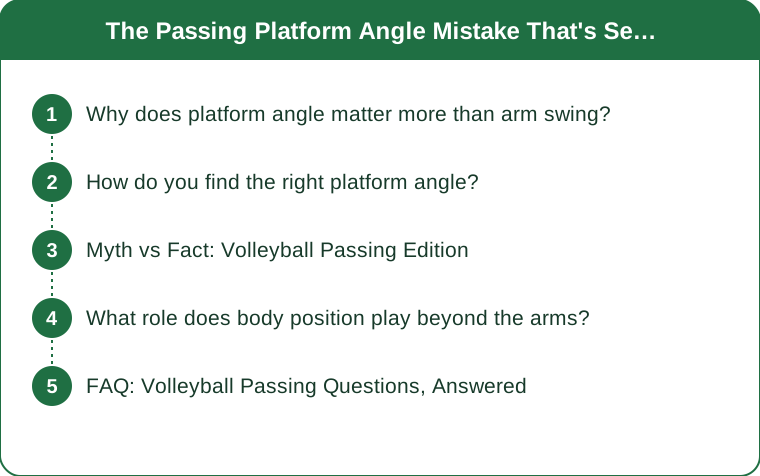
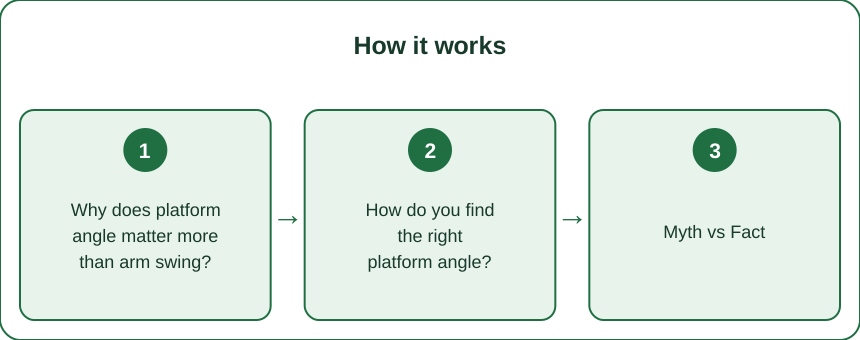
Why does platform angle matter more than arm swing?
The ball’s direction off your forearms is determined almost entirely by the angle of your platform relative to the ball’s incoming path, not by how much you swing your arms. Arm swing adds power, but angle determines direction — swinging harder at the wrong angle just sends a bad pass further and faster.
This is why players who barely move their arms can pass more accurately than players swinging hard: they’ve locked in the angle and let the serve’s own speed do most of the work.
How do you find the right platform angle?
Start with your platform roughly parallel to your target line, then adjust based on serve speed: a harder, flatter serve needs a slightly more open (upward-angled) platform to redirect it up toward the target, while a shorter, softer serve needs a flatter platform since it has less speed to redirect.
The common mistake is using the same angle regardless of serve speed — a fixed 45-degree platform works for one serve speed and sends every other speed off target.

Myth vs Fact: Volleyball Passing Edition
Myth: A perfect pass requires strong arm swing. Fact: Minimal arm movement with a well-set platform angle is frequently more accurate than an aggressive swing — control comes from angle and platform stability, not power.
Myth: You should always move your feet to get square to the ball. Fact: While footwork matters, elite passers often adjust platform angle for small positioning errors rather than always fully repositioning — angle adjustment is faster than full footwork for last-second corrections.
Myth: Passing technique is the same for every serve type. Fact: Float serves (unpredictable movement) require reading the ball later and adjusting angle at contact, while topspin serves are more predictable and allow earlier platform setting — treating them identically causes many miss-reads.
What role does body position play beyond the arms?
Platform angle is set by the shoulders and hips, not just the wrists and forearms — a passer who squares their whole upper body to the target, then locks the platform angle from that base position, gets more consistent results than someone adjusting angle from the wrists alone at the last second.
FAQ: Volleyball Passing Questions, Answered
Why do my passes go long on hard serves specifically?
A flat or slightly downward platform against a hard, flat serve redirects too much forward energy upward and long — open the platform angle slightly less, or absorb more with knee bend instead of platform angle alone.
How much should knees bend during a pass?
Significant knee bend (getting low before contact) lets you use leg power for distance instead of relying on platform angle alone to generate the pass’s trajectory.
Does hand positioning affect platform angle?
Yes — thumbs pointed down and platform locked before contact (not adjusted during) creates a more stable, repeatable angle than adjusting hand position as the ball arrives.
TL;DR:
- Passing direction comes from platform angle, not arm swing power
- Adjust angle based on serve speed — flat/hard serves need more upward angle, soft serves need flatter
- Set platform angle from your shoulders and hips, locked before contact
- Float serves need later reads; topspin serves allow earlier, more predictable angle-setting
Next practice, focus entirely on locking your platform angle before the ball arrives — let the serve’s own speed do the rest of the work.
Keep Reading
This article is for general informational and styling purposes only. Fit, sizing, and product availability may vary.